Grand Street Lofts
Williamsburg, Brooklyn, New York
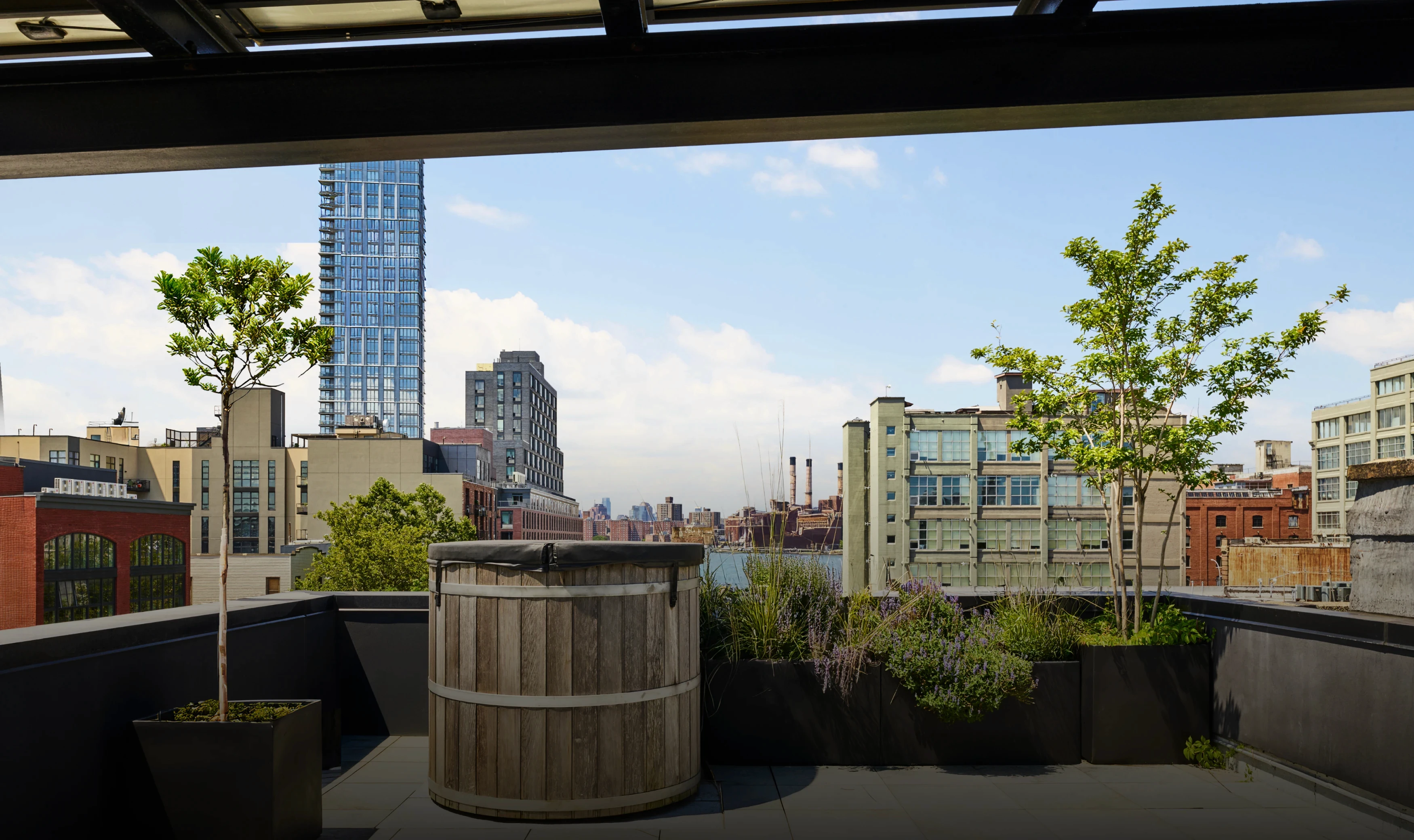
The most urgent question in urban construction isn't aesthetic — it's energetic. How do you build new buildings in dense city environments that don't cost the planet? The Grand Street Lofts in Williamsburg, Brooklyn sets out to answer that question with a ground-up Passive House development that charts a clear path toward net-zero and net-positive performance in the urban fabric. Andrés Cortés led the architectural design of the building enclosure in collaboration with Knoxville-based design studio KBAS — best known for designing the September 11 Pentagon Memorial — and developer Blue Zees Development. The collaboration brought together complementary disciplines around a shared commitment: proving that rigorous sustainability and compelling architecture are not in tension but the same ambition pursued at different scales.
DATE
2018
TYPE
Residential
CLIENT
Blue Zees Development
EXPERTISE
Site-Specific Design Process
SERVICES
Architectural Design Enclosures Design Fabrication Consultation Special Inspections


The mixed-use program is straightforward — two expansive residential lofts above a ground-floor commercial space. The performance beneath that simplicity is anything but. Continuous insulation runs across the entirety of the building envelope without interruption.


The residential levels are airtight, eliminating the invisible energy losses that accumulate in conventional construction.
High-performance glazing manages solar gain in precise coordination with a heat and moisture recovery ventilation system, maintaining indoor air quality and thermal comfort without the energy penalty of mechanical conditioning.
The exterior makes the building's intentions visible. A custom Corten steel façade — designed and detailed by Andrés — weathers naturally over time, developing a patina that ties the new construction to the industrial material culture of the surrounding Williamsburg streetscape.
It is contextual and distinctive in equal measure. A building that belongs to its neighborhood while making an unambiguous statement about where construction must go.